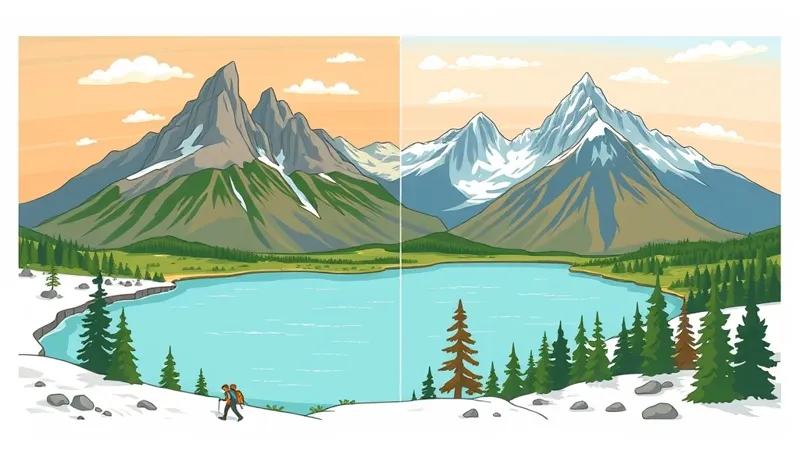
When should you visit Torres del Paine for trekking or day tours?
October through April is the main planning window for trekking in Torres del Paine, with the longest daylight around December and January. The right month depends on your route, tolerance for wind and the services your itinerary needs. This is seasonal orientation, not confirmation that a trail, campsite or departure is available.
For the W trek, overnight reservations and connecting transport must work together. A day visit has fewer dependencies, but still needs authorized access, sufficient walking time and a confirmed return.
- Longest daylight: consider December or January.
- Spring landscapes: consider October or November, allowing for lingering snow.
- Autumn photography: consider March or April; foliage timing varies.
- Winter travel: treat June through August as a separate, route-specific planning exercise.
Check CONAF’s current park requirements before committing to travel dates.
How do the seasons compare month by month?
Daylight provides a clearer seasonal guide than any promise about weather. Southern Hemisphere summer is December–February, autumn March–May, winter June–August and spring September–November.
This monthly comparison focuses on daylight and service checks rather than presenting a nearby station’s readings as park-wide conditions. Wind remains a planning consideration throughout.
- January — summer: long daylight, gradually shortening; confirm all overnight services and transport.
- February — summer: daylight shortening; confirm accommodation and sailing connections.
- March — autumn: daylight shortening; confirm route-specific service dates.
- April — autumn: shorter outing window; check closing dates individually.
- May — autumn: daylight still shortening; verify guide rules and transport.
- June — winter: shortest daylight near the solstice; verify every route and service.
- July — winter: daylight increasing from its minimum; verify snow-related restrictions and accommodation.
- August — winter: daylight increasing; check guide and transfer arrangements.
- September — spring: daylight increasing; do not assume summer services have started.
- October — spring: longer daylight; confirm opening dates and snow-related restrictions.
- November — spring: daylight approaching its maximum; confirm complete route connections.
- December — summer: longest daylight near the solstice; confirm reservations rather than assuming availability.
Consult the Chilean Meteorological Directorate’s climate portal for station observations. Read temperature records in the context of their station location, elevation, reference period and statistic. A monthly mean is neither a daytime maximum nor a forecast.
What should you consider in spring or autumn?
The practical distinction is lengthening daylight in spring versus shortening daylight in autumn. Clear views, snow-free trails and quieter paths should not be assumed in either season.
September–November can suit travelers prioritizing lengthening days. March–May can suit photography focused on autumn landscapes, but foliage depends on conditions and location. Snow cover can affect either period.
For Torres del Paine in October versus April, choose October if increasing daylight better supports your itinerary; choose April if autumn photography matters more and your required services are confirmed.
Chile Travel provides destination context; CONAF determines the access checks that matter to your route.
What are the trade-offs of December, January or February?
Summer gives you more daylight, not guaranteed good weather or longer trail opening hours. December builds toward the longest day, January retains long daylight, and February moves toward a shorter daylight window.
For Torres del Paine in December versus January, accommodation availability and workable connections may matter more than the daylight difference.
Long days can provide itinerary flexibility, but booked-out refugios and cancelled sailings can still derail a plan. W trek travelers should check Vértice and Las Torres Patagonia for their own accommodation dates, services and booking conditions.
What needs checking before a winter visit?
A winter visit needs explicit confirmation of the proposed route and its supporting services. Short daylight and potential snow or ice change the planning assumptions used for summer.
Before booking, establish:
- Whether CONAF authorizes your intended route on your dates.
- Which guide, registration and equipment requirements apply.
- Whether transport operates on both arrival and departure days.
- Whether the relevant accommodation accepts reservations.
- What happens financially and logistically if conditions prevent the outing.
An advertised winter excursion is not evidence of unrestricted independent access. Likewise, a past closure notice should not be treated as a permanent annual closure. Check current CONAF instructions and the relevant accommodation provider’s conditions.
How should wind and changing weather affect your month choice?
No month guarantees calm conditions. Pack layers for rain, wind and possible snow regardless of season, and retain room for itinerary changes.
Sustained wind describes an average over a measurement interval; a gust is a brief peak. They are not interchangeable. Read numerical wind comparisons alongside their measurement location, period and units in km/h, rather than treating an exceptional figure as typical park weather.
Use the Chilean Meteorological Directorate’s forecast portal for short-range forecasts and SENAPRED for official warnings. Climate averages help choose a season; forecasts and park instructions help decide what is appropriate on the day. Follow ranger instructions and operator decisions, not an invented universal wind cutoff.
How much daylight can you expect?
Daylight is longest around the December solstice and shortest around the June solstice. The seasonal pattern is:
- Summer solstice: the longest daylight window.
- Winter solstice: the shortest daylight window.
- March equinox: daylight is declining toward winter.
- September equinox: daylight is increasing toward summer.
Use the US Naval Observatory’s astronomical data service for date-and-location calculations. Exact clock times depend on the park coordinate, calculation year and applicable Chilean time rules.
Daylight means sunrise to sunset, excluding twilight. Mountains, cloud cover, trail-entry deadlines and transport schedules can all reduce usable outing time.
Which months suit the W trek versus day visits?
Choose the W trek around connected bookings; choose a day visit around an achievable return. More daylight cannot repair a missing overnight reservation or transport connection.
- Fixed dates, W trek: establish authorized access and consecutive accommodation availability before finalizing the route.
- Flexible dates, W trek: compare complete reservation sequences with Vértice and Las Torres Patagonia, then arrange transport.
- Fixed dates, day visit: prioritize an itinerary whose entry deadlines and return arrangements fit your available day.
- Flexible dates, day visit: allow scope to adjust around forecasts, subject to booking terms.
For Puerto Natales bus itineraries, check Bus-Sur’s own timetable. If your route uses the Pudeto–Paine Grande catamaran, confirm Hielos Patagónicos’ sailing schedule separately. An El Calafate departure also adds international travel logistics and a long road day.
Use our W trek planning comparison to assess multi-day dependencies. For a shorter visit, compare Torres del Paine day tours against your actual travel dates.
What should you book and verify after choosing a month?
Book the dependent services together, then recheck changeable conditions before travel. The seasonal daylight pattern is stable; access rules and service calendars are not.
- Entry and route permissions: consult CONAF and its official ticketing directions.
- Overnight accommodation: confirm dates and cancellation terms directly with Vértice or Las Torres Patagonia.
- Transport: verify the actual bus and, where relevant, sailing operator’s timetable and cancellation arrangements.
- Excursion requirements: establish guide arrangements, equipment, departure details and weather contingencies before payment.
- Forecasts and warnings: revisit Meteorological Directorate forecasts and SENAPRED alerts close to departure.
Torres del Paine Guide is an independent editorial and affiliate comparison guide, not a tour operator. We do not run trips. Current starting prices belong on the relevant tour pages, with live figures in their GetYourGuide widgets.
What else should you know before choosing travel dates?
Match the month to the itinerary rather than looking for a universally best season.
Is October or April better for my itinerary?
October favors increasing daylight; April favors an autumn-focused visit. Snow, foliage and services vary, so confirm access with CONAF and accommodation with the relevant provider.
Which month has the longest daylight?
December contains the longest day, near the summer solstice. January also offers long daylight, but neither month guarantees usable trail time throughout it.
Is there a reliably wind-free month?
No. Use seasonal information for planning and official forecasts and warnings for decisions close to travel.
Can I plan the W trek in winter?
Only around explicitly confirmed access, guide requirements, accommodation and transport. Consult CONAF and the official accommodation providers before treating a winter itinerary as feasible.
Does more daylight mean longer trail opening hours?
No. Trail deadlines and park instructions remain controlling regardless of sunset time; verify them with CONAF.
Sources
Official sources serve different purposes; accommodation providers speak only for their own services.
- CONAF: park requirements, route instructions and official visitation information.
- Chilean Meteorological Directorate: station climate records; its separate forecast portal supports short-range planning.
- US Naval Observatory: astronomical sunrise and sunset calculations.
- Vértice: its accommodation, operating dates and booking conditions.
- Las Torres Patagonia: its accommodation, services and booking conditions.
Additional official references are SENAPRED for alerts, Chile Travel for destination context, and the actual transport operator for each connection.