Why is Puerto Natales a base for Torres del Paine treks?
Puerto Natales is a common preparation and overnight base for Torres del Paine, with accommodation, equipment services and onward transport options. It is not the starting point of every trek: the town sits outside the park, and travelers still need to reach the entrance, transport stop or trailhead appropriate to their route.
For W trek visitors, town is a practical place to collect rental equipment, buy food and organize baggage before a multi-day journey. Day-tour visitors can instead sleep in Puerto Natales and return after individual excursions, subject to the booked itinerary.
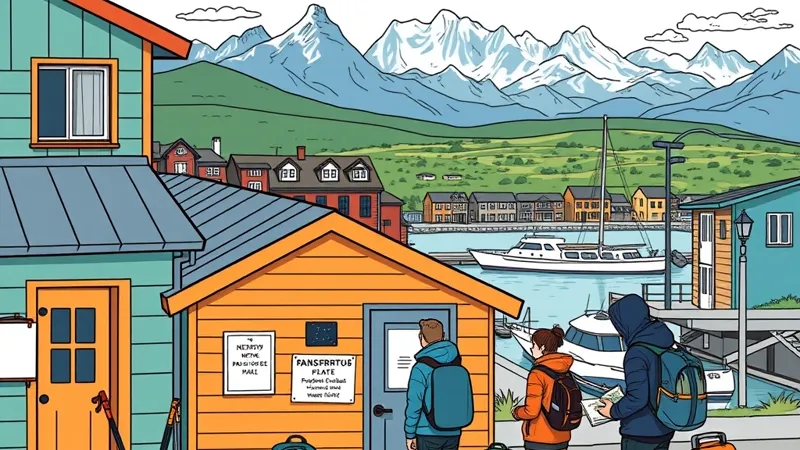
The town lies beside Última Esperanza Sound in Chilean Patagonia. Chile Travel provides the wider destination context. Think of Puerto Natales as a logistics base, rather than part of the trekking route itself.
Where is Puerto Natales, and how do travelers get there?
Travelers can arrive through Puerto Natales Airport, through Punta Arenas, or overland from elsewhere in Patagonia. Choose according to services available for your actual dates, not a seasonal route map.
- Puerto Natales Airport to town: confirm the flight schedule with the airline and arrange the ground transfer separately. DGAC provides airport information; an airport listing does not establish year-round flight availability.
- Punta Arenas to Puerto Natales: compare arrival at the airport with departure from a city bus terminal. They are different endpoints, and an airport pickup must be explicitly confirmed. Consult Bus-Sur for its own routes and published journey durations; check the operator's site.
- El Calafate to Puerto Natales: this is an international overland journey. Confirm the departure terminal, border-document requirements and arrival arrangements with the carrier.
Compare the complete journey, including waiting and ground transfers. Avoid building a tightly timed park departure around an incoming flight or international bus.
How do you travel from Puerto Natales to Torres del Paine?
Scheduled buses suit travelers following established park connections; transfers, rental cars and day tours serve different itineraries. A park entrance is not automatically your trek access point.
Useful route distinctions include:
- Puerto Natales Rodoviario to Laguna Amarga: the park entrance is separate from the Central sector and the Base Torres trail approach. Confirm any onward shuttle or transfer independently.
- Puerto Natales Rodoviario to Pudeto: Pudeto is the departure point for the water connection to Paine Grande. A bus ticket does not guarantee a sailing or a coordinated connection.
- Pudeto to Paine Grande: consult Hielos Patagónicos for its own catamaran timetable, ticket conditions and operating updates. Wind can interrupt travel.
Bus-Sur publishes its own stops and schedules; check the operator's site before matching transport to accommodation. Admission arrangements are separate through Pases Parques.
A booked transfer can suit a specific endpoint, but confirm that endpoint in writing. A rental car offers flexibility for road-based visits, while creating parking and vehicle-retrieval questions for a through-trek. A day tour bundles an excursion rather than replacing transport for every independent itinerary. Our getting-there guide explains the broader choices.
How many nights should you plan before and after a trek?
Plan your town stay around arrival timing and preparation tasks, rather than a universal minimum.
Preparation example: arrive, check in, collect equipment, shop and review onward bookings before leaving for the park after an overnight stay. Allow more breathing room if arrival is late or equipment collection depends on restricted opening hours.
Recovery example: return to Puerto Natales for a shower, equipment return and an overnight stay before continuing elsewhere. This reduces pressure to connect directly from a weather-sensitive park journey.
A town-based day-tour itinerary is different: Puerto Natales remains your accommodation base between excursions. Neither approach guarantees that everything fits a fixed schedule, particularly when transport changes or refugios are booked out.
Where should you stay before the W trek?
The most useful location is the one that matches your confirmed departure point and preparation needs.
- Town center: consider this for access to food shopping, meals and equipment services; map the particular businesses you need.
- Waterfront: suitable if spending time by the sound matters to your stay, but check the actual route to transport.
- Near the bus terminal: potentially convenient for a terminal departure, though a tour or transfer may collect elsewhere.
Ask about early breakfast, late check-in, drying space and luggage storage, including collection hours and any charge. Confirm these services with the property rather than assuming them from its category.
Our accommodation comparison may contain affiliate links; we may earn a commission from qualifying bookings. Check each property's official information and map the actual journey to your departure point.
What should you arrange before entering the park?
Arrange admission, route-specific accommodation and transport before treating the trekking plan as settled.
- Admission: use Pases Parques to check the applicable ticket, purchase deadline and entry conditions.
- Overnight reservations: CONAF identifies accommodation bookings as necessary for the W trek. Vértice Patagonia manages western properties including Paine Grande and Grey; Las Torres Patagonia manages eastern properties including Central, Chileno, Cuernos and Francés. Confirm the exact itinerary with their own booking services.
- Equipment rental: reserve the items you need and confirm collection, fit, condition, deposits and return arrangements. Do not assume stock will be available on arrival.
- Food: establish which meals your booking includes before shopping, and confirm cooking arrangements at each overnight stop.
- Baggage: obtain agreement on storage duration, security, charges and retrieval hours.
- Transport: match named stops and connection arrangements to your actual overnight bookings.
Independent trekkers organize these components themselves. Guided-programme customers should request a written list of inclusions and exclusions.
Consult CONAF for current trail conditions, permitted activities, fire restrictions and safety guidance. CONAF prohibits wild camping and limits camp-stove use to designated areas.
What weather and packing conditions should you prepare for?
Prepare for changing rain, wind and snow conditions rather than treating weather in town as a forecast for the park.
A sheltered street in Puerto Natales tells you little about an exposed trail or water crossing. Monthly climate averages also cannot predict conditions on your trekking dates. Consult the Dirección Meteorológica de Chile for short-term forecasts and CONAF for route-specific notices.
Pack adaptable layers, waterproof outerwear, warm accessories and protection for belongings inside your pack. Check footwear and rental equipment before departure. Seasonal equipment obligations and access restrictions should be checked against current official park guidance, not inferred from the calendar alone.
What can you do without starting a multi-day trek?
A flexible town visit can center on the waterfront, meals and local cultural stops, with excursions planned separately.
Walk beside the sound when conditions suit, and check local museum or cultural-venue opening information before setting out. Chile Travel provides destination ideas; confirm individual venue access directly.
Cueva del Milodón is an excursion outside town, not a waterfront stop. Consult CONAF for visitor guidance and arrange transport separately. Torres del Paine day tours likewise involve travel beyond Puerto Natales and can mean a long road day.
Boat excursions depend on operating conditions. Neither a sailing, a particular view nor a wildlife sighting should be treated as guaranteed.
How should you budget and compare day tours?
Build your budget by category and compare what each booking actually includes, rather than relying on a headline price.
Allow for accommodation, meals, equipment rental, baggage storage, park admission and onward transport. Add any necessary shuttle or water connection, and leave room for disruption-related changes.
For tours, compare confirmed pickup areas, route stops, walking expectations, meals, admission exclusions, cancellation terms and return arrangements. A sightseeing circuit and a Base Torres hike serve different purposes.
Use our Torres del Paine day-tour comparison to narrow the choice; the current starting price is on the tour page. Live prices and ratings appear in GetYourGuide widgets. We may earn an affiliate commission from bookings. Torres del Paine Guide is an independent editorial guide, not the tour operator.
What should travelers know before staying in Puerto Natales?
Puerto Natales supports park trips, but town accommodation and park trekking arrangements are separate decisions.
Does every trek start in Puerto Natales, and is it inside the park?
No. Puerto Natales is outside Torres del Paine. As explained in the transport section, trekkers continue to route-specific entrances or access points; some arrive without staying in town.
Is a car necessary?
No. Buses, booked transfers and tours can serve suitable itineraries. Check exact stops and connections with the provider, as outlined in the transport section.
How long should you stay?
Allow enough time for your arrival, equipment collection and shopping. The preparation and recovery examples above are flexible options, not a stay length that suits everyone.
Can you leave luggage in Puerto Natales?
Possibly, through your accommodation or a storage service. Confirm acceptance, fees, security and collection hours before relying on it; see the preparation checklist.
Can you do the W trek as daily returns from town?
The standard W is a multi-day route with overnight accommodation bookings, as described by CONAF. Town-based day excursions can visit selected areas but do not reproduce the continuous trek. See the accommodation and transport sections.
Sources
Use official destination and park guidance alongside the terms published by each service provider.
- Chile Travel: destination context and excursion ideas.
- CONAF: park rules, route guidance and Cueva del Milodón information. Also consult the Torres del Paine park portal for visitor notices.
- Pases Parques: admission and ticket conditions.
- Bus-Sur: its own transport routes, timetables and booking terms.
- Dirección Meteorológica de Chile: forecasts; its climatology service provides station records and climate normals.
DGAC provides airport information. Las Torres Patagonia and Vértice Patagonia provide their own accommodation inventories and booking conditions; Hielos Patagónicos provides its own catamaran information.