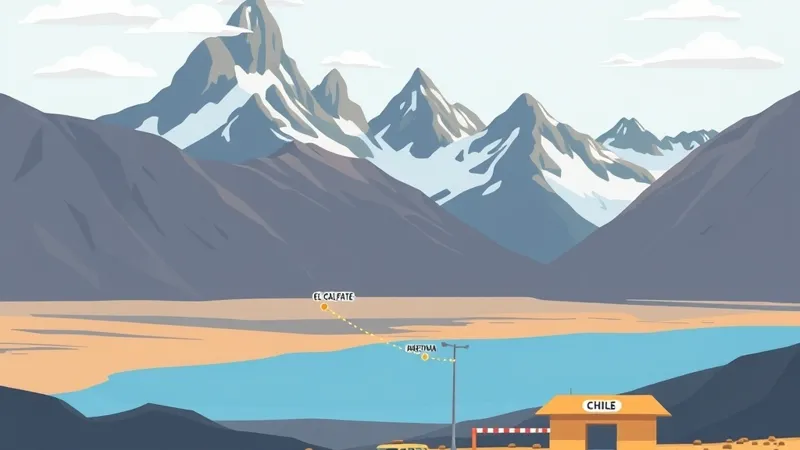
Can you visit Torres del Paine from El Calafate in one day?
A same-day sightseeing visit can be possible with a suitable operating excursion or an independently verified driving plan. It is not a W Trek itinerary. Feasibility depends on border hours, entry requirements, road conditions and the actual stops offered.
Returning to El Calafate that evening means crossing the frontier in both directions. A one-way transfer into Chile is a different arrangement: confirm the drop-off location, luggage allowance and onward transport rather than assuming an excursion permits you to stay behind.
Torres del Paine Guide is an independent editorial comparison resource, not a transport provider. For an initial comparison, review the El Calafate–Torres del Paine day-tour page, then check the selected service’s itinerary and terms before committing.
Which border crossing and park entrance does the route use?
Cancha Carrera–Río Don Guillermo is a crossing to confirm, not a guaranteed operating option. El Calafate is in Argentina; Torres del Paine is in Chile. Reaching the frontier does not mean you have reached the park entrance.
Read the Argentine international-border portal alongside Chile’s border authority for the crossing’s operating information.
Use this route checklist against the selected itinerary:
- El Calafate to the Argentine frontier: confirm the road sequence and pickup area.
- Cancha Carrera–Río Don Guillermo: confirm that the service uses this crossing and that its hours fit both journeys.
- Chilean frontier to the park: obtain the actual approach roads and named entrance.
- Inside the park: identify the viewpoints, walking stops and exit route.
- Return or onward journey: confirm the final destination explicitly.
Request segment distances in km from the provider and compare them with official road information. A schematic route map explains geography; it is not navigational guidance or evidence that a road is open.
How much of the day is spent travelling rather than visiting?
The published excursion duration is not the time spent inside Torres del Paine. There is no universal El Calafate to Torres del Paine driving time that reliably includes border processing and park stops.
Ask for a schedule separating:
- Pickup: hotel collection versus departure from El Calafate.
- Outbound driving: road travel before and after the frontier.
- Border formalities: document checks and customs processing.
- Park visit: driving between stops, walking and meals.
- Return driving: including the return border crossing.
- Drop-off: arrival in town versus arrival at your accommodation.
Use the selected provider’s published schedule alongside official border hours. Confirm whether each time is local to Argentina or Chile and whether a date-dependent time-zone difference applies. Queues, road conditions and weather can shorten stops or change the return schedule; avoid a tight onward connection.
What documents and customs rules apply?
Requirements depend on nationality, immigration status and whether you will return to Argentina. A tour booking does not establish your right to enter either country.
Before purchasing, check:
- Passport requirements for your nationality and travel document.
- Chilean visa or entry-permission requirements through Chile’s National Migration Service.
- Eligibility to re-enter Argentina through Argentina’s National Migration Directorate, including the conditions of any visa or residence permission.
- Additional documents for minors, particularly when travelling without both parents or legal guardians.
- Any migration record or proof of status required for your return transport.
For food and animal or plant products, consult Chile’s Agricultural and Livestock Service, SAG. Check the declaration procedure before packing snacks. Declaring an item does not guarantee admission: inspection authorities determine whether it may enter. Do not assume packaged food is automatically exempt.
Can you take a rental car across the border?
Only proceed if the rental company explicitly permits the international journey and supplies the required arrangements. An ordinary rental reservation is not proof of cross-border authorization.
Obtain written answers about:
- Vehicle authorization, insurance and required customs documents.
- Authorization lead time and permitted border crossings.
- Driver eligibility and whether every intended driver is covered.
- Roadside assistance in Chile and recovery arrangements.
- Return location, international drop-off permission and applicable charges.
Compare the actual rental contract with Chilean Customs guidance. Do not assume another traveller’s paperwork or processing time applies to your booking.
Self-driving puts route planning, vehicle compliance and border timing in your hands. An excursion transfers driving and itinerary management to the provider, but travellers remain responsible for their personal entry documents.
What costs and park-entry arrangements should you check?
Compare the complete trip cost, not just the advertised excursion or rental amount. Without a specific booking’s inclusions, each item below requires confirmation:
- Excursion or rental — requires confirmation: transport scope, pickup area and return destination.
- Fuel — requires confirmation: rental fuel policy or coverage within the excursion price.
- Cross-border vehicle charges — requires confirmation: permission, insurance and administration where applicable.
- Park admission — requires confirmation: whether included and who purchases it.
- Meals — requires confirmation: supplied meals, restaurant stops and food restrictions.
- Cancellation — requires confirmation: border closure, weather disruption, missed entry and supplier cancellation terms.
Check Pases Parques for admission categories, CLP tariffs and purchase procedures. Tickets are sold online; arrange them at least 24 hours ahead and coordinate the visit date with your provider. Check the official site before purchase.
The current starting price is on the tour page. Live GetYourGuide widgets display current prices and ratings; neither implies availability for your date. Affiliate disclosure: eligible bookings through these links may earn Torres del Paine Guide a commission. Recommendations should depend on itinerary suitability, not commission.
What can a sightseeing trip include, and which hikes need another plan?
Only treat viewpoints, short walks and meal stops as included when the selected itinerary confirms them. A park name on a booking page does not establish which entrance or trails you will visit.
Separate listed itinerary elements from optional stops and activities conditional on weather or access. For any walk, request the exact trail, distance in km, elevation information in meters where relevant, surface and turnaround arrangements. Compare access information with CONAF visitor guidance.
A sightseeing excursion should not be sold as completing the W Trek or automatically including Base Torres. The W requires a multi-day plan and accommodation bookings. Consult the guided W Trek comparison if hiking is your priority rather than fitting it around a border excursion.
How should weather and seasonal conditions affect your plan?
Daylight, wind, precipitation and restrictions should shape the itinerary, not merely your packing list. Seasonal operating patterns can also affect transport and available stops.
Bring layers suitable for rain, wind or snow in any month, plus appropriate footwear and protection for essential documents. Consult Chile’s Meteorological Directorate, Argentina’s National Meteorological Service and official park notices before departure. A nearby town’s climate averages are not a forecast for a park trail.
Do not interpret a scheduled departure as a promise of access, clear views, a sailing or wildlife sightings.
How do guided tours, self-driving and overnight alternatives compare?
Choose according to your acceptable travel day and desired park time, not transport price alone.
- Guided excursion: a published itinerary offers a useful baseline. Confirm walking demands, guiding language, vehicle accessibility, cancellation terms and whether the service returns to El Calafate. Personal immigration compliance remains yours.
- Self-driving: offers flexibility within border and park restrictions. You manage documents, vehicle permissions, navigation, walking choices and return timing; flexibility does not guarantee more park time.
- Overnight alternative: separates some travel from sightseeing and can better suit hiking. Confirm accommodation, transfers, accessibility and each supplier’s cancellation policy independently.
Scheduled public transport should be checked with operating carriers; do not assume connections support a same-day park visit. Compare the transport guide and accommodation options if a Puerto Natales base or overnight stay better matches your priorities.
Frequently asked questions
Can I return to El Calafate that evening or stay in Chile?
A return excursion and a one-way transfer are different products. Confirm the destination and border schedule in writing; staying in Chile requires an agreed drop-off and onward plan.
Which passport, visa and food checks apply?
Check Chilean entry and Argentine re-entry eligibility for your nationality with the respective migration authorities. Minors may need additional documents. Consult SAG before carrying food; declaration is not automatic permission to import it.
Does a rental booking include the Chile border permit?
Do not assume it does. Obtain explicit international-use permission, required vehicle documents and insurance confirmation from the rental company before driving toward Cancha Carrera–Río Don Guillermo.
Are park tickets and Base Torres included in sightseeing tours?
Both are booking-specific. Confirm admission arrangements through Pases Parques and your provider. Base Torres is a separate hiking commitment, not an automatic feature of a sightseeing itinerary.
What should I do if the crossing or itinerary changes?
Check the official border notice and contact your provider or rental company before travelling. Ask about rerouting, cancellation and return arrangements. Do not substitute an unconfirmed crossing or trail to preserve the original schedule.
Sources
These authoritative resources support different parts of planning; service-specific details belong in the selected itinerary or rental contract.
- Argentina’s international-border portal: crossing information and Argentine-side notices.
- Chile’s border authority: Chilean-side operating hours and restrictions.
- SAG: agricultural declarations and restricted products.
- CONAF: visitor guidance, trail rules and park notices.
- Pases Parques: admission categories, tariffs and ticket purchase.
Also consult both national migration authorities for entry eligibility, Chilean Customs for vehicle requirements, and both national meteorological services for forecasts. Keep the dated itinerary and terms supplied with your booking.