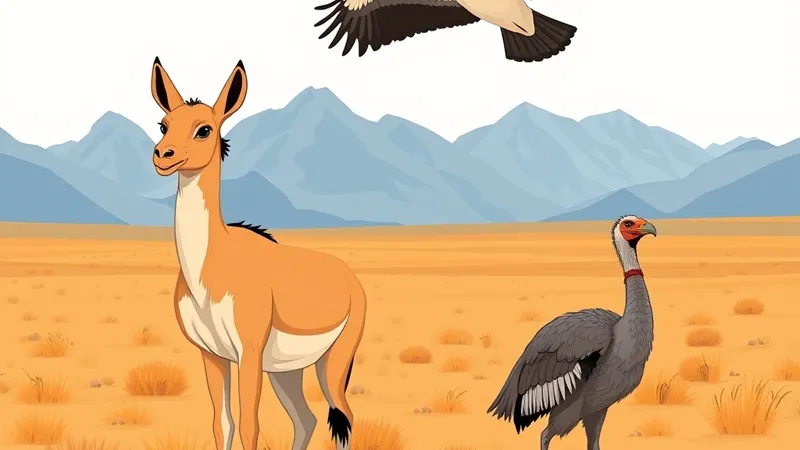
Guanacos, Andean condors and lesser rheas are three animals to look for in Torres del Paine. CONAF's park profile lists all three among the park's wildlife. Their presence does not make a sighting certain on a particular visit: your route, the animals' movements and what you can distinguish at a distance all matter.
Start with the kind of outing you want. A day built around roadside viewpoints and a day spent walking a mountain trail leave different opportunities to pause and observe. Choose the itinerary for its activities and habitats, rather than treating a photograph in a tour description as a promise of an encounter.
Which animal are you looking at?
These are useful starting points for identification, rather than a checklist every visitor completes:
- Guanaco — Lama guanicoe: a long-necked camelid with a brown coat, pale underside and darker face. Look across open country rather than only at the mountain skyline.
- Andean condor — Vultur gryphus: a large soaring bird with broad wings and separated outer flight feathers. Adults and younger birds can look different.
- Lesser rhea — Rhea pennata: a long-legged, flightless bird associated with open country. Some references call it Darwin's rhea or use the scientific name Pterocnemia pennata.
The species accounts linked below explain those features. If the view is distant or brief, recording an uncertain identification is more useful than turning a silhouette into a confident species record.
How to recognize a guanaco
Look for the combination of a slender neck, long legs, brown upper coat and pale belly. The head is darker than much of the body. Animal Diversity Web's guanaco account describes these features and the species' preference for open, dry habitats.
A guanaco is not simply a llama photographed in the wild. Both are South American camelids, but the names refer to different animals. The ADW account also distinguishes guanacos from the more heavily built llama and from alpacas. For a visitor, the overall outline and coat pattern are better starting points than trying to estimate body size across a broad landscape.
After identifying the animal, spend a moment watching what it is doing: grazing, resting, moving or looking up. Describe the action you can see rather than assigning it a human emotion. A photograph can preserve details for later identification without requiring a closer approach.
How to recognize an Andean condor overhead
Watch the shape of the wings before trying to see the head. Animal Diversity Web's Andean condor account describes dark adult plumage, a pale neck collar and gaps between the outer wing feathers. Younger birds are browner and lack the same adult contrast.
That difference matters when checking a photograph: absence of a clear white collar in a distant image is not enough by itself to dismiss a possible condor. Equally, apparent size is difficult to judge without a reference. Try to note the wing outline, flight pattern and visible plumage together.
Condors use rising air to soar, as the ADW account explains. This describes their flight, not a reliable appointment with one above a particular cliff. Leave time to scan the sky if conditions allow, but do not build a transport connection or walking plan around a hoped-for bird.
What are the ñandúes in the grassland?
The ñandú in CONAF's Torres del Paine species list is Rhea pennata, the lesser rhea. Animal Diversity Web's account under Pterocnemia pennata describes the same bird as Darwin's rhea: a flightless South American species with long legs and brown plumage, flecked with white in adults.
The account places it in open plains, scrub and Patagonian steppe. That makes scanning the ground an important complement to watching the sky. An animal partly hidden in grass may offer a less obvious outline than a standing bird in a photograph.
Rheas are not ostriches, even though a long neck and long legs can suggest the comparison. Use the name lesser rhea when matching the bird to a field guide. Avoid using a distant view to guess its age or sex when the identifying details are unclear.
How to plan wildlife stops
Think in terms of habitat and access, then check the actual itinerary. Open grassland invites a different search from a wooded trail or a mountain viewpoint. CONAF's park profile describes the park's mix of steppe, scrub and forest; a route devoted to one landscape is not a survey of all of them.
For each proposed stop, ask:
- What habitat is part of the planned visit?
- Is observation from a viewpoint, a walk or the vehicle?
- Is time to stop included, or is the place only passed along the way?
- Who decides whether a stop is practical on the day?
- Can you enjoy the outing if the target animal is absent?
Ask the driver or guide to choose stopping places rather than requesting a sudden roadside halt for a photograph. Give passing traffic space and avoid arranging a group around an animal's route. These are planning choices, not a claim that every roadside pullout is an approved viewing area.
Day tour or W trek: compare the actual activities
Compare the listed stops, walking requirements and time allocated to observation. A tour with a vehicle may include several stops, while a trekking day may devote most of its time to reaching the next destination. Neither format guarantees wildlife sightings.
Use our day-tour comparison to examine different outing formats, and our first-time W trek guide for the walking and accommodation decisions involved in that route. Then read the operator's current itinerary for the particular departure you are considering.
Before booking, check pickup location, walking requirements, park-entry arrangements and what the operator says about changes to the day. Treat a wildlife-focused description as a reason to ask about observation time, not as evidence of an encounter rate. Some links on our tour pages are affiliate links, and a qualifying booking may earn us a commission.
Weather and daylight: leave room for the day itself
CONAF's visitor recommendations describe rapidly changing Patagonian weather and recommend clothing for rain, wind and snow. They also direct visitors to current access information before setting out.
For wildlife observation, that means keeping the plan flexible: if visibility is poor, a distant animal may be difficult to identify even when it is present. Choose pauses that fit the day's conditions and the rest of your itinerary. A month associated with longer daylight does not provide a specific forecast or a certain sighting.
Use our season-planning guide for the broader trip decision. Check current park and operator information for the visit itself, especially when a walking day depends on transport or access.
Watching and photographing without disturbing wildlife
CONAF's park activity rules restrict wildlife observation to daylight and official trails, and prohibit feeding or disturbing wild animals.
Build your observation around that framework. Binoculars help with detail; a longer camera lens can produce a closer-looking photograph while you remain farther away. Neither is a reason to follow an animal, surround it or try to make it move for a better picture.
Choose a position that leaves the animal room to continue its activity. If a photograph is too distant to resolve, keep it as a record of the landscape or the encounter rather than pursuing a closer frame. A useful outing can include watching behavior, learning a silhouette and leaving an uncertain identification open.
Frequently asked questions
Can I count on seeing all three animals?
No. CONAF lists guanacos, condors and ñandúes in the park, but a species list is not a prediction for your route or day. Plan around places and activities you want to experience even if a particular animal is absent.
Are guanacos the same as llamas?
No. They are related South American camelids, but guanacos and llamas are different animals. The ADW guanaco account linked above describes the guanaco's appearance and its differences from other camelids.
Are ñandúes ostriches?
No. The park's lesser rhea is a South American bird. Rhea pennata and the name Pterocnemia pennata used in the ADW account refer to the lesser rhea discussed here.
Is the W trek a wildlife tour?
A trekking itinerary and an outing designed around wildlife observation answer different travel priorities. Compare the actual route, walking commitment and time for stops rather than choosing from wildlife photographs alone.
Do I need a specialist puma outing for this trip?
Start with your main objective. This article introduces guanacos, condors and lesser rheas; it is not a puma-tracking itinerary. If pumas are the reason for your visit, compare specialist operators and their current approach separately, without treating an encounter as certain.
Sources
Species descriptions use Animal Diversity Web's accounts for Lama guanicoe, Vultur gryphus and Pterocnemia pennata. The rhea account is an older species reference, not a source for current park access or conditions.
Park occurrence and habitat context come from CONAF's Torres del Paine profile. Visitor conduct and practical guidance come from the park's activity rules and 2026 recommendations. Sources consulted on 22 October 2026; access and operating conditions can change.