What are lenga forests, and why do they turn red in autumn?
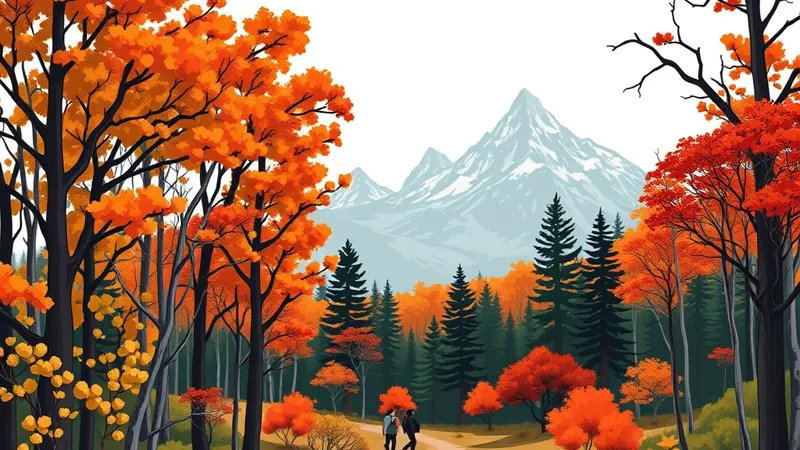
Lenga forests are stands of Nothofagus pumilio, a deciduous southern beech native to southern South America. Their foliage can develop yellow, orange and red tones before falling during the Southern Hemisphere autumn. In Torres del Paine, this seasonal change adds color to wooded mountain valleys, but neither red leaves nor a particular peak date is guaranteed.
As leaves age, green chlorophyll breaks down, revealing yellow and orange carotenoid pigments. Red coloration involves anthocyanins, pigments that some autumn leaves produce. Location, exposure and seasonal conditions influence the resulting display.
Kew’s Plants of the World Online provides the botanical reference for Nothofagus pumilio. Hoch, Zeldin and McCown’s research on autumn anthocyanins explains their possible protective role during leaf senescence; it is general plant-science evidence, not a Torres del Paine foliage forecast.
How can visitors distinguish lenga from other Patagonian trees?
Leaf shape and seasonal leaf retention are more useful than red color alone. Another deciduous southern beech, commonly called ñirre, can also change color.
Use this compact field comparison alongside the species descriptions in Kew and Chile’s biodiversity inventory, SIMBIO:
- Lenga — Nothofagus pumilio: small, broadly oval leaves with rounded teeth and a relatively regular margin; deciduous.
- Ñirre — Nothofagus antarctica: small, variable leaves with a more irregularly toothed, often wavy margin; deciduous.
- Magellanic coigüe — Nothofagus betuloides: small, leathery, generally glossy leaves with finely toothed margins; evergreen.
These are clues, not a substitute for examining several characteristics. Wind-shaped growth can make tree stature misleading. Photograph leaves where they grow, together with branching and bark, rather than collecting vegetation. Keep the scientific names attached to your photographs: common names vary between guides and languages.
When can visitors see autumn colors in Torres del Paine?
March through May is the broad autumn planning period, not a guaranteed foliage window. April does not guarantee peak color, and a photograph from a previous visit cannot establish what a particular trail will look like.
Elevation, slope exposure and seasonal conditions can shift both color development and leaf fall. A sheltered stand may retain foliage while exposed trees nearby have already lost theirs.
Distinguish general seasonal information from a dated observation naming the actual valley or trail. Chile Travel provides destination context; recent park notices are more relevant to access. Neither replaces a local foliage observation. Build flexibility into your plans rather than choosing a demanding itinerary solely for autumn reds.
Where can visitors look for lenga forests in Torres del Paine?
Wooded valley sections are the relevant setting; the W trek is not continuously forested. The Ascencio Valley and French Valley are useful areas to investigate when choosing a forest-focused itinerary, but a valley name alone does not confirm the trees beside a particular viewpoint.
Use CONAF’s park information and its official trail map to distinguish these route contexts:
- Ascencio Valley: the approach toward Base Torres combines wooded sections with exposed terrain. A booking that mentions the towers should not be interpreted as a forest-only walk.
- French Valley: check which section an itinerary actually reaches. CONAF lists Italiano–Mirador Británico as a 5.4 km leg; this is not a return distance or the complete approach from accommodation.
- Paine Grande approach: CONAF lists Paine Grande–Italiano as a 7.5 km leg. That figure describes travel between named points, not continuous lenga forest.
The CONAF map identifies Italiano as a ranger post, not an overnight campsite. Match forest interests to the actual route description, not simply the destination photograph.
How can an autumn forest visit fit into a day tour or W trek?
Choose by actual walking itinerary and forest access, rather than by the label “autumn tour.” Road sightseeing, a guided mountain walk and a multi-day trek offer different experiences.
- Park day visit: commonly starts in Puerto Natales. Walking distance and transfer time depend on the selected stops; a road-based itinerary does not guarantee a sustained forest walk. Check return transport and park entry separately.
- Operator-led excursion: check the precise trail, meeting point, published duration and turnaround conditions. Confirm that walking through woodland is included rather than assuming it from a Base Torres photograph.
- Multi-day W trek: CONAF describes this as a multi-day itinerary requiring accommodation bookings. Use per-leg map distances rather than treating a package’s total as an official park measurement. Forest sections alternate with exposed ground.
West-side accommodation is managed by Vértice Patagonia and east-side accommodation by Las Torres Patagonia. Confirm opening periods and availability directly with the relevant operator. Booked-out refuges, wind and cancelled sailings can constrain the itinerary.
Torres del Paine Guide is an independent editorial and affiliate comparison site, not a tour operator. Use our transport planning guide and guided W trek comparison for the wider plan. For a shorter visit, compare park day tours by their actual walking content. Current starting prices are on the tour pages, with live prices and ratings in their GetYourGuide widgets.
What should travelers check before an autumn forest walk?
Autumn foliage does not establish route accessibility. Before leaving, check:
- Trail status and access: consult CONAF notices for closures, applicable seasonal guide requirements and mandatory registration at every ranger station.
- Entry: use the official Pases Parques portal and check its purchase requirements before travel.
- Weather: consult Chile’s meteorological service. A regional forecast does not describe every exposed slope.
- Transport: reconfirm Bus-Sur departures and, where relevant, Hielos Patagónicos sailings directly with the operator. Do not assume a summer connection operates throughout autumn.
- Accommodation: confirm each overnight reservation with Vértice Patagonia or Las Torres Patagonia; CONAF prohibits free and wild camping.
- Equipment: follow CONAF’s park guidance on layers against rain, wind and snow, and consult its seasonal rules for mandatory winter equipment.
Leave room for a changed plan. A reserved excursion or bed does not override a closure or make a sailing certain.
Why are lenga forests important to Patagonian ecosystems?
Lenga forests provide habitat, return organic matter to the soil and create varied forest structure. Living trees, understory vegetation, fallen leaves and dead wood each contribute different shelter and growing conditions.
Leaf litter feeds decomposition and nutrient cycling. Canopy gaps and sheltered ground influence the conditions in which seedlings establish. These are general forest processes, not measurements specific to Torres del Paine.
INFOR’s forestry repository and peer-reviewed research indexed through SciELO Chile cover Nothofagus pumilio. Findings from another Patagonian forest should not automatically be presented as local results about regeneration, growth or fire recovery.
CONAF’s conservation rules require visitors to remain on marked trails, carry out waste and respect fire restrictions. Under CONAF’s park rules, open flames are banned and camp stoves may be used only in designated areas. Forest habitat never guarantees a wildlife sighting.
How can visitors photograph autumn lenga forests responsibly?
Compose photographs from permitted trails and viewpoints, without rearranging the habitat. Combine foliage with trunks or a mountain background when visibility allows. Overcast light can reveal leaf detail; wind may call for a faster shutter or a wider composition.
Use natural color balance rather than forcing every leaf toward saturated red. Yellow foliage, bare branches and muted slopes are equally valid autumn subjects.
Keep your composition within the marked trail, as required by CONAF, and avoid collecting vegetation or approaching wildlife to improve a photograph. CONAF prohibits recreational drones in the park; a quiet valley does not establish permission to fly.
What else should visitors know about autumn lenga forests?
Botanical seasonality and visitor access are separate questions. Keep these distinctions in mind.
Do all lenga trees turn red?
No. Nothofagus pumilio can develop yellow, orange and red foliage. Color and intensity vary, as explained in the pigment section above.
Does April guarantee peak color?
No. April falls within autumn, but local conditions affect coloration and leaf fall. A calendar month cannot guarantee a particular display.
Is lenga evergreen?
No. Nothofagus pumilio is deciduous. The evergreen Magellanic coigüe, Nothofagus betuloides, is a different species.
Is a W trek booking necessary to see forests?
Not inherently. A day itinerary may include woodland, but confirm its actual trail and access conditions. Overnight W trekking requires accommodation bookings under CONAF’s visitor guidance.
Are autumn routes always open?
No. CONAF’s access notices establish applicable seasonal restrictions and closures, while weather can also affect access. Check those notices and official entry information before departure.
Sources
Botanical evidence, general plant science and changing visitor logistics serve different purposes.
- Royal Botanic Gardens, Kew — Plants of the World Online: botanical taxonomy and distribution reference for the named southern beeches.
- Chile’s Ministry of the Environment — SIMBIO biodiversity inventory: complementary species descriptions and national biodiversity information.
- Hoch, Zeldin and McCown — “Physiological significance of anthocyanins during autumnal leaf senescence,” Tree Physiology: general pigment physiology, not a lenga-specific color calendar.
- CONAF: official trail maps, visitor notices, access and conservation rules.
- Pases Parques: official visitor-entry arrangements.
- Chile’s meteorological service: forecasts and meteorological information.
- INFOR digital repository and SciELO Chile: forestry and scientific literature; findings require attention to the species and study location.
- Vértice Patagonia, Las Torres Patagonia, Bus-Sur and Hielos Patagónicos: operator-specific accommodation and transport information, not scientific evidence.